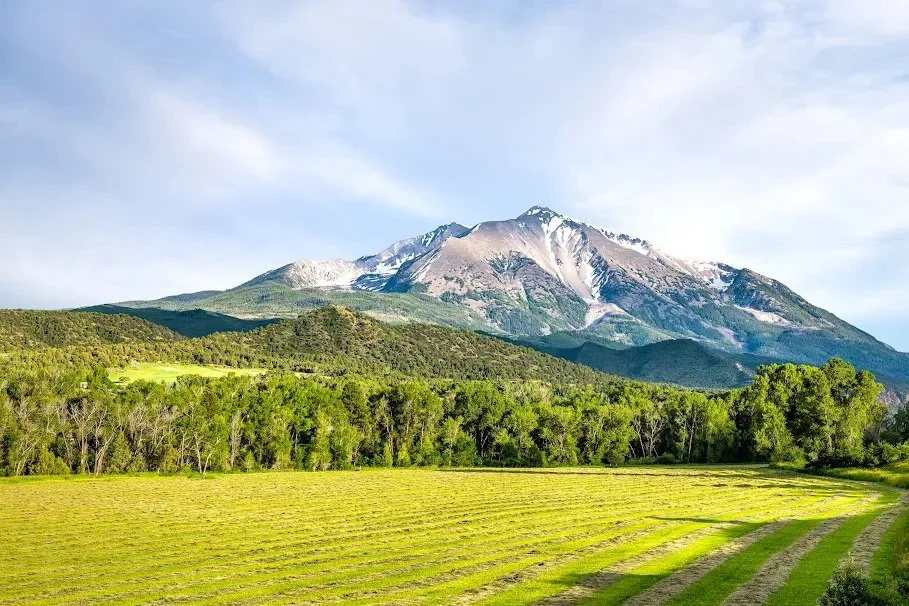
Defensible Space & Wildfire Fuel Mitigation for Aspen, Carbondale & the Roaring Fork Valley
Living in the Roaring Fork Valley means living with wildfire risk. Dense vegetation, steep terrain, and homes in the wildland–urban interface make fuel work around structures one of the most practical steps owners can take.
ABOUT TREELINE FORESTRY
Treeline Forestry is a local tree care company serving Aspen, Carbondale, Snowmass, Basalt / El Jebel, Glenwood Springs, and the broader Roaring Fork Valley. Founders Chris DePriest (ISA Certified Arborist and Certified Treecare Safety Professional) and Frank Houpt (certified arborist, raised in the valley) help homeowners, HOAs, and property managers thin fuels, prune for clearance, and clear dead material—starting closest to the home.
Our promise is simple: a consultation, an agreed fuel-mitigation plan, and carefully executed work that leaves your property safer and more defensible.
Call (970) 414-0128 (Monday–Friday, 8am–5pm) or request a fuel-mitigation consultation.
WHAT DEFENSIBLE SPACE MEANS IN THE ROARING FORK VALLEY
Defensible space is the modified area around a structure where vegetation and other fuels are managed so fire has less intensity and less chance to ignite the home. City of Aspen and Firewise-style guidance emphasize the home ignition zone—the ground, plants, decks, and attachments closest to the building—because embers and radiant heat often threaten homes long before a large flame front arrives.
On a mountain lot, that usually means reducing continuous fuel from the foundation outward, removing ladder fuels that let fire climb into crowns, and keeping flammable material away from siding, decks, and carports. Prioritize work closest to the structure; the first five feet do the most for home survival.
For deeper Home Ignition Zone guidance, see Colorado State Forest Service materials linked from City of Aspen Wildfire Prevention (Tips for Fire Resistant Landscapes).
DEFENSIBLE-SPACE ZONES
Distances below align with City of Aspen wildfire mitigation policy and commonly cited CSFS / Firewise guidance. Confirm requirements for your jurisdiction on the agency page.
| ZONE | DISTANCE FROM STRUCTURE | INTENT |
|---|---|---|
| Zone 1 (immediate / “0–5”) | 0–5 feet | Keep living and flammable material away from the home and attached structures (deck, carport). Prefer noncombustible or ignition-resistant materials and plantings. |
| Zone 2 | 5–30 feet | Reduce fuel continuity and create safer spacing of vegetation. Aspen / Colorado Wildfire Resiliency Code landscape guidance also notes pruning for structure clearance and keeping branches off the ground. |
| Zone 3 | 30–100 feet | Further fuel reduction so an approaching fire has less intensity. Work is site-specific. |
Ladder fuels are low branches, shrubs, and brush that can carry fire from the ground into tree crowns. Raising crowns where appropriate, thinning understory, and breaking vertical fuel chains are core parts of wildfire fuel reduction around homes.
WHAT TREELINE FORESTRY DOES FOR FUEL MITIGATION
We start with a thorough consultation, then implement the measures you agree to. Per our services page, fuel mitigation includes:
- Thinning vegetation for proper clearance between trees and shrubs
- Creating safe spacing between limbs and structures
- Directional pruning to guide growth away from the home
- Removing deadwood from nearby trees
- Clearing dead trees or shrubs from the property
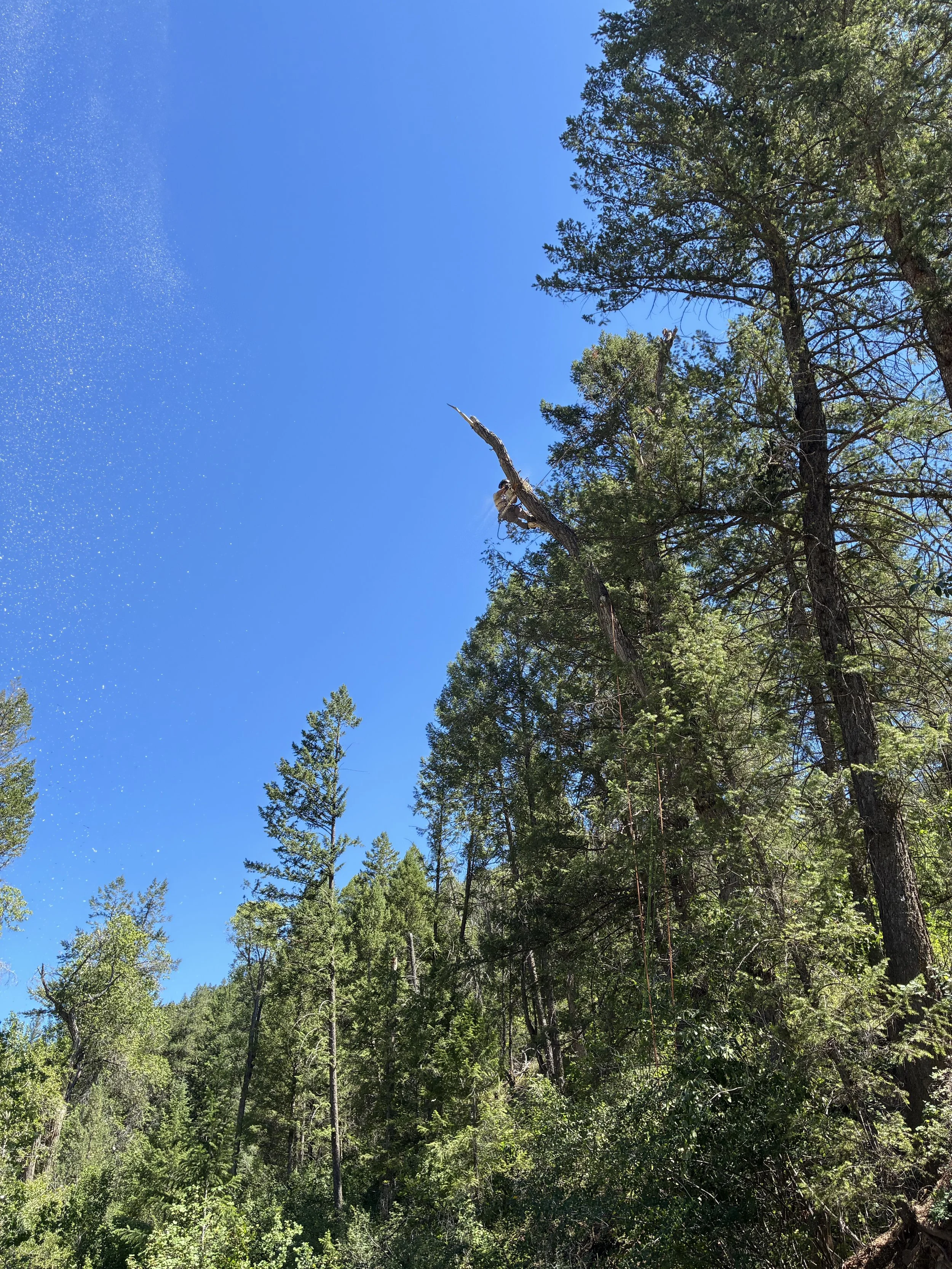
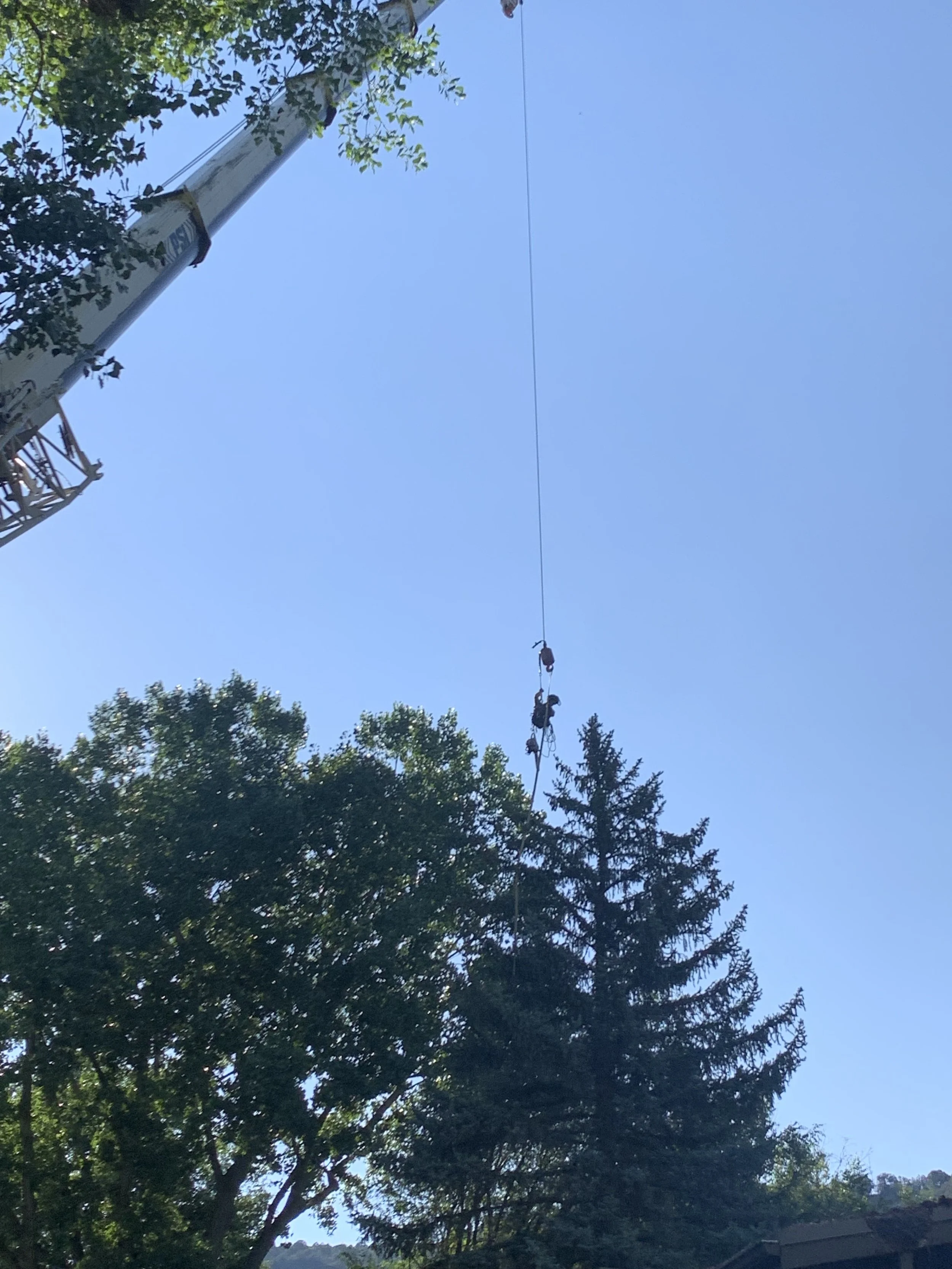
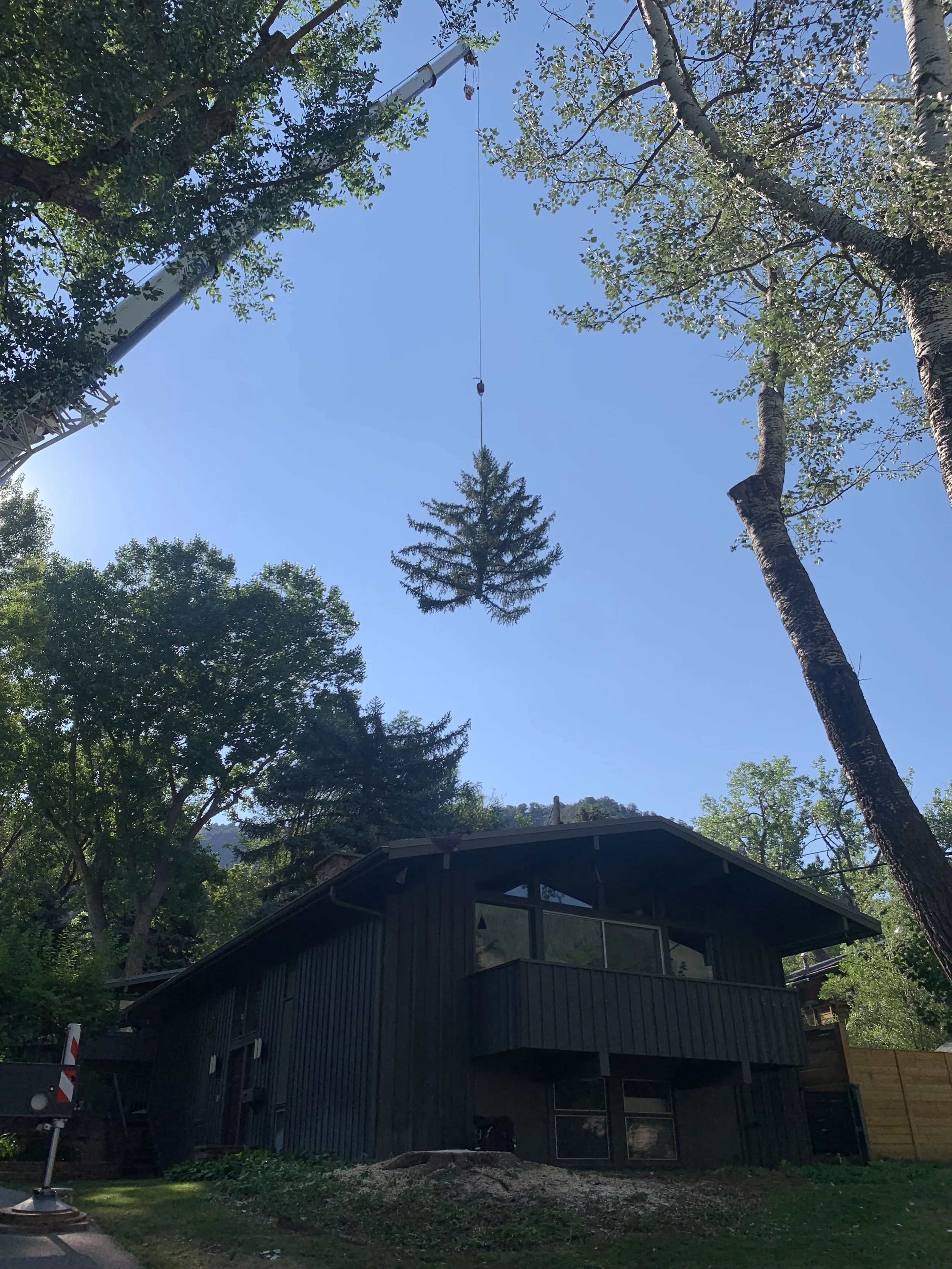
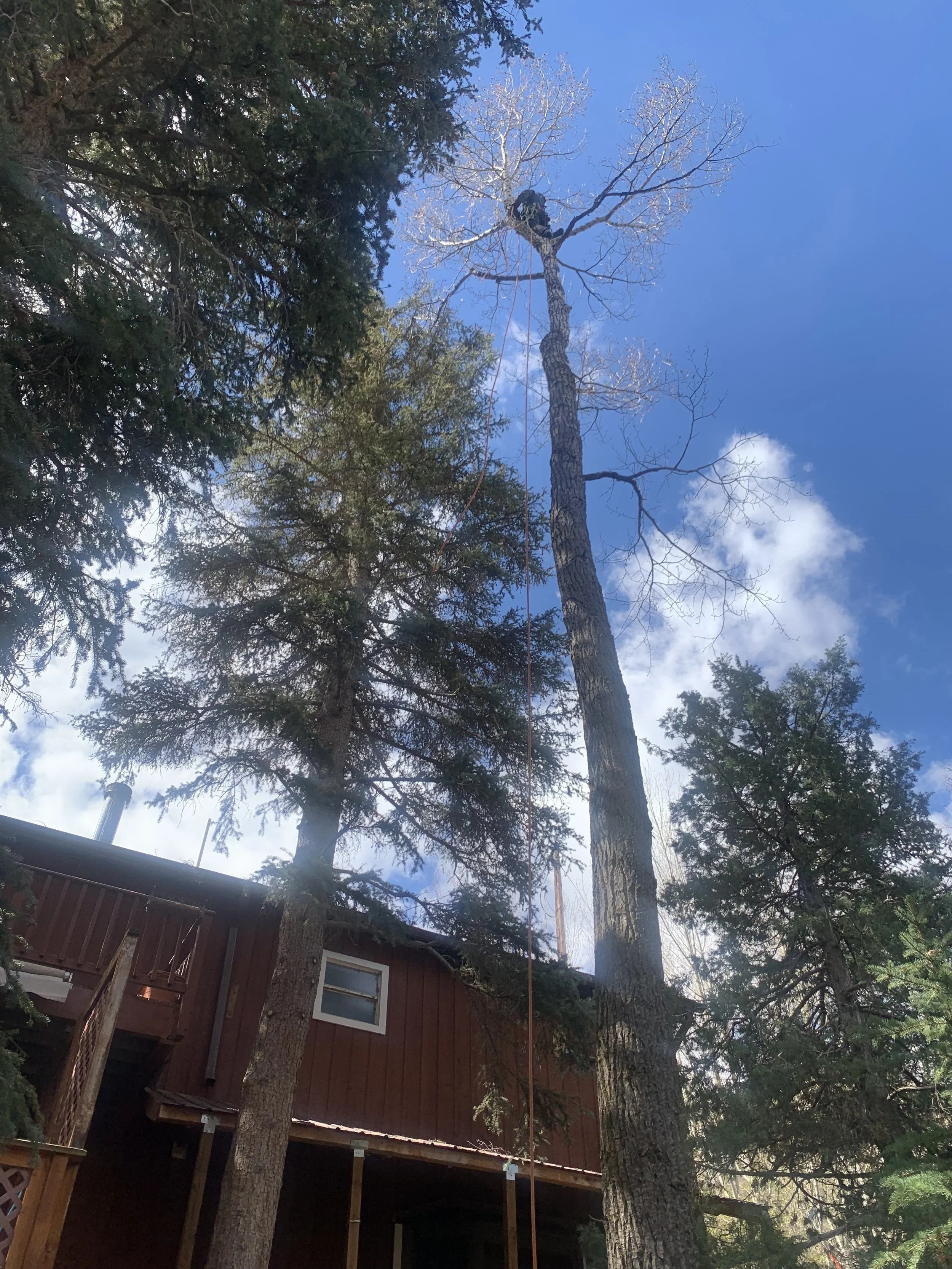
When mitigation needs more than thinning and clearance, we can support tree risk assessment, pruning or removal, and consultation on mitigation strategies for insurance conversations. Advanced climbing, rigging, and crane work when needed keep removals on tight mountain lots controlled.
Already have an Aspen Fire or Roaring Fork Valley Wildfire Collaborative assessment? Share it with us—we’ll help prioritize thinning, clearance pruning, and removals that match your plan.
ASPEN, PITKIN COUNTY & ROARING FORK VALLEY LOCAL CONTEXT
Treeline implements vegetation work and helps you set priorities. We do not issue City of Aspen or county permits, and we do not replace fire-district or Collaborative assessments. Agencies set the process; we coordinate with you after—or while—you pursue those steps.
CITY OF ASPEN (INSIDE CITY LIMITS)
For standalone wildfire-related tree work on existing structures inside City limits, the process (Ordinance 11, 2024 updates to Municipal Code 13.20) is on Aspen Wildfire Prevention and in the Wildfire Mitigation Policy (July 2024):
- 01 Contact the Aspen Fire Protection District for a free home assessment.
- 02 Apply for a tree removal permit from Parks and Open Space; include the assessment.
- 03 Meet the City Forester onsite; final determination uses the Wildfire Mitigation Matrix.
- 04 After the permit, trees may be removed by the homeowner or a licensed tree care provider.
- 05 If replanting of wildfire- / ignition-resistant trees is required, schedule a Forester inspection when done.
City policy uses 0–5 / 5–30 / 30–100 ft zones. Fees may be waived or reduced in some cases—the City Forester decides; check current policy rather than assuming a waiver. This pathway is for stand-alone permits on existing structures within City limits, not development removals.
Aspen Fire Protection District Assessments
Aspen Fire’s Wildfire Mitigation Assessment covers residences, neighborhoods, and subdivisions in the district using Colorado State Forest Service / Firewise-style criteria. Assessments are recommendations only—they do not force mitigation.
Seasonal note: Aspen Fire states assessments are not available November 1 – April 30. Confirm signup windows on the live AFPD page. For some tree-removal requests, AFPD directs callers to City Forestry first, then Prevention—follow the latest steps on aspen.gov and Aspen Fire. Treeline can coordinate implementation once you have, or while you pursue, the official assessment.
Roaring Fork Valley Wildfire Collaborative
The Mitigation Assistance Program supports property owners and community groups with vegetative fuels reduction, home ignition zone work, community chipping, and larger projects.
Applications are rolling; funding is limited and competitive, with a 50% match (cash or in-kind; low-income match reduction may apply). Strong applications prioritize 0–5 ft, then out toward 30 ft. Free confidential home assessments are available through local fire partners (Aspen, Roaring Fork, Carbondale & Rural, Glenwood Springs), Eagle County (Eagle portion of RFV), or West Region Wildfire Council (Marble / Gunnison). See RFVWildfire.org for current award figures.
Colorado Wildfire Resiliency Code (Aspen Context)
Aspen City Council approved formal adoption of the Colorado Wildfire Resiliency Code on March 25, 2026, effective April 23, 2026 for building permits submitted after that date (Aspen Wildfire Prevention).
Landscape bullets include noncombustible / ignition-resistant materials in 0–5 ft, pruning clearances in 5–30 ft, and noncombustible / ignition-resistant fences within eight feet of a structure.
Frame as building/code context, not Treeline legal advice. Overview: Colorado DFPC.
INSURANCE LETTERS, HOAs & PROPERTY MANAGER
Many valley owners first look into fuel mitigation after an insurance letter or renewal conversation. Treeline’s consultation helps homeowners, HOAs, and landscape companies develop mitigation strategies that can support conversations about insurance requirements. We implement agreed vegetation work; carriers decide outcomes—we do not guarantee insurer approval.
For HOAs and property managers, we can walk boards through phased, structure-outward work with clear scope. Chris and Frank are valley-based, ISA-credentialed arborists—useful when boards need a vetted local contractor.
OUR PROCESS & TYPICAL TIMELINE
CONSULTATION / SITE VISIT
Goals, any insurance or HOA documents, access, and priorities closest to structures.
PLAN
Thinning, pruning, deadwood, and removals as needed; note where Aspen permits or fire assessments apply.
COORDINATION
You handle agency paperwork, or we support navigation: Treeline does not issue permits.
IMPLEMENTATION
Agreed fuel-mitigation work, with chipping or haul-away as scoped.
FOLLOW-UP
Maintenance cadence; optional risk assessment or plant health care if relevant.
Timeline depends on property size, access, permits, and season. We do not promise same-week starts unless capacity and conditions allow. Reach us Monday–Friday, 8am–5pm, to schedule.
WHAT OUR CLIENTS SAY


FREQUENTLY ASKED QUESTIONS
-
Defensible space is the managed area around a home where vegetation and other fuels are reduced so fire has less intensity and less chance to ignite the structure. In the Roaring Fork Valley, prioritize the home ignition zone—especially the first five feet—then spacing and fuel breaks farther out.
-
Inside City of Aspen limits, standalone wildfire-related tree removals generally follow a free Aspen Fire assessment, a Parks and Open Space tree-removal permit, and a City Forester determination. Outside city limits, rules may differ—check your jurisdiction before cutting. Treeline can perform permitted work as a licensed tree care provider; we do not issue the permit.
-
Yes. Our consultation can help develop mitigation strategies aligned with common insurance and HOA expectations, and we can implement agreed vegetation work. We do not guarantee that any carrier will approve a claim, renewal, or premium change.
-
Yes. Chris DePriest is an ISA Certified Arborist and Certified Treecare Safety Professional (CTSP) with 10+ years in the industry and years in the Roaring Fork Valley. Frank Houpt is a certified arborist raised in the valley. See our About page.
-
We serve Aspen, Carbondale, Snowmass Village / Old Snowmass, Basalt / El Jebel, Glenwood Springs, and the broader Roaring Fork Valley. Unsure if your address is in range? Call (970) 414-0128.
-
No. Aspen Fire assessments are recommendations only. You may do the work yourself or hire a local tree company or landscaper. Many owners hire an ISA-certified arborist for thinning, clearance pruning, and removals near structures.
-
Keep living and flammable material away from the home and attached structures such as decks or carports. Favor noncombustible or ignition-resistant surfaces and plantings, clear dead debris, and avoid continuous fuel against siding. Aspen and CSFS-style guidance treat this 0–5 foot zone as the highest priority.
-
Call (970) 414-0128 Monday–Friday, 8am–5pm, use our request service form, or email Paul@treelineforestry.com, Chris@treelineforestry.com, or Frank@treelineforestry.com. Bring any Aspen Fire or Collaborative assessment if you already have one.
READY TO START?
Ready to make your property more defensible? Call Treeline Forestry at (970) 414-0128 or request a fuel-mitigation consultation.
Local roots. Lasting care.